Sparkling Excellence from the Southern Tip
While the Champagne region of France may have given the world its most famous sparkling wine, South Africa has carved out its own distinctive and increasingly respected space in the world of bubbles through the Cap Classique method, or CC. Made using the same traditional bottle fermentation method as Champagne, it is a style defined by patience, precision, and an unwavering commitment to detail.
The origins of sparkling wine itself are steeped in both myth and mastery. In the 17th century, Benedictine monk Dom Pérignon is often credited, perhaps apocryphally, with exclaiming “Come quickly, I am tasting the stars” upon discovering the magic of natural bubbles forming in wine.
Later, the world of Champagne was fundamentally shaped by Madame Barbe Nicole Clicquot, known as Veuve Clicquot, who refined the riddling process in her twenties after taking over her late husband’s cellar. Her influence helped transform sparkling wine into the disciplined, elegant craft we recognise today.
In France, it is Champagne. In Italy, Prosecco. In Spain, Cava. And in South Africa, it is proudly Cap Classique.
A Style Built on Tradition and Time
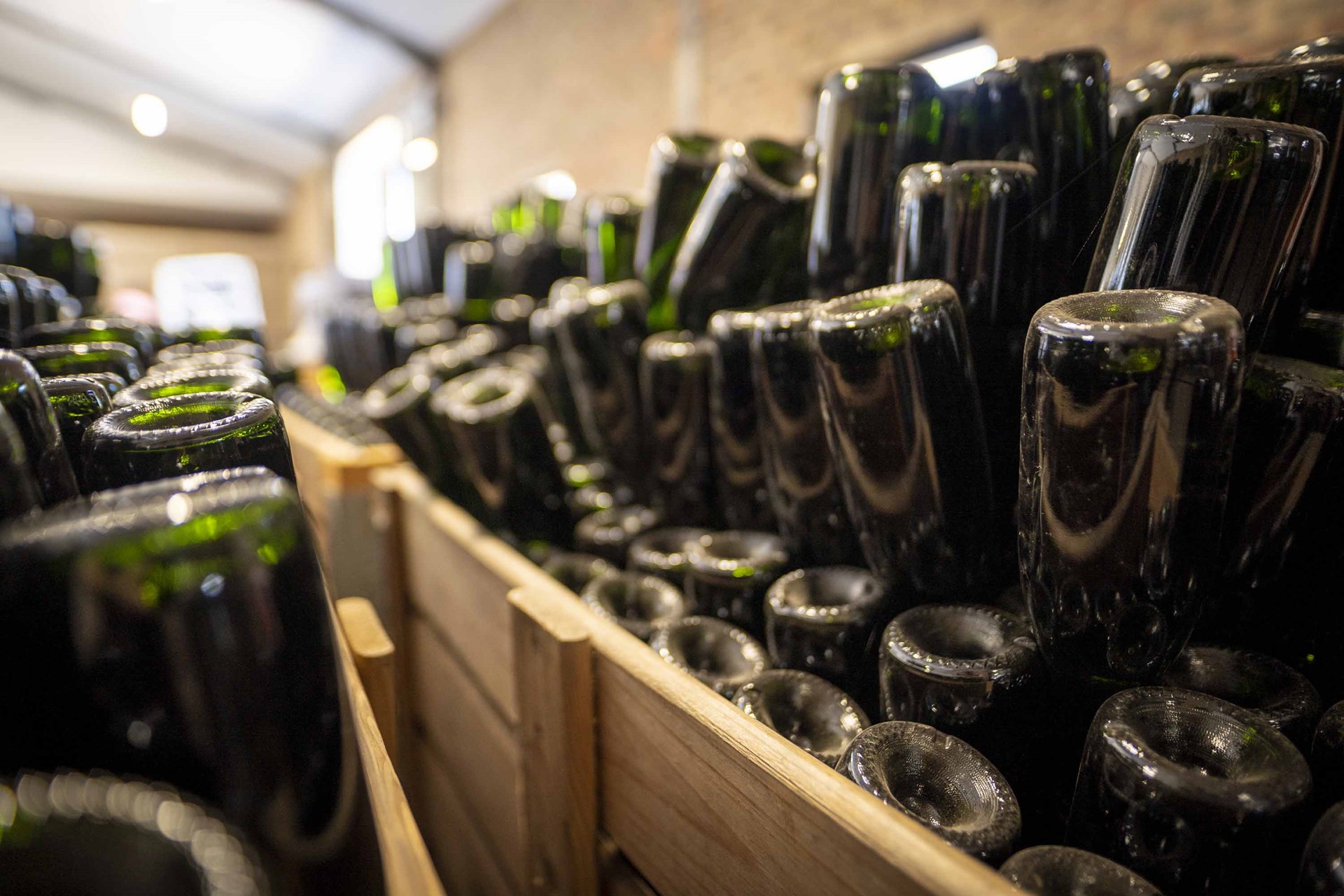
Cap Classique is made using the traditional method, where a secondary fermentation takes place in the bottle. This is what creates the fine mousse, layered complexity, and ageing potential that defines the style. It is a process that cannot be rushed. It demands patience, technical precision, and a willingness to wait for the wine to reveal itself over time.
It is also what makes Cap Classique so expressive of place. Because while the method is exact, the fruit is not. And it is here, in the vineyards of Plettenberg Bay, that something quietly extraordinary began to emerge.
Cap Classique in the Plettenberg Bay Winelands
Despite being one of South Africa’s youngest and smallest wine regions, the Wine of Origin Plettenberg Bay designation has developed a reputation for exceptional Cap Classique. With approximately 58 hectares under vine across a small number of working vineyards and cellars, this narrow stretch of the Garden Route has proven that scale is not a measure of quality.
From the beginning, Plett’s approach to Cap Classique was unconventional.
The first sparkling wines from the region were made using Sauvignon Blanc, a departure from the traditional Champagne blend of Chardonnay and Pinot Noir. This was not imitation. It was interpretation. A coastal reimagining of a classic method, shaped by what the land naturally offered rather than what tradition dictated.
The result was something distinctly Plett. Bright, expressive, and lifted by the region’s maritime influence, these early wines set the tone for what the winelands would become. Not a replica of Europe, but a coastal original with its own voice.
A New Chapter with Chenin Blanc
Today, that spirit of innovation continues.
Alongside Sauvignon Blanc, a new development has quietly added another layer of intrigue to the region’s sparkling story: Chenin Blanc Cap Classique.
Chenin brings a different texture to the glass. It offers structure, gentle orchard fruit, and a natural balance between freshness and depth. In the Cap Classique context, it introduces a new dimension of complexity, expanding what is possible for the region while staying true to its coastal identity.
It is another first. Another step in a journey defined by curiosity rather than convention.
The Character of Plett Bubbles
What defines Cap Classique from the Plettenberg Bay Winelands is not simply method or grape variety. It is place.
Cool maritime air slows ripening, preserving acidity and freshness. Long growing seasons allow for subtle flavour development. And the surrounding ecosystem of fynbos, forest, and ocean creates a sense of purity that carries through into the wine.
The result is a style that tends towards:
- Crisp precision rather than weight
- Fine, persistent bubbles
- Delicate fruit expression
- And an unmistakable coastal edge
It is sparkling wine shaped by restraint rather than excess.
Recognition and Craft
Across the region, producers such as Newstead, Kay and Monty, Lodestone, Bitou, Whiskey Creek, Packwood and Bramon have helped establish Plett’s reputation for Cap Classique excellence. Their wines consistently demonstrate that this small coastal region is capable of producing sparkling wines of remarkable finesse and individuality.
Each bottle reflects a shared philosophy. Attention to detail. Respect for the method. And a belief that place matters as much as process.
A Toast to the Unexpected
To drink Cap Classique from Plettenberg Bay is to experience something slightly unexpected.
Not a copy of tradition, but a conversation with it.
From Sauvignon Blanc beginnings that broke with convention, to the emerging elegance of Chenin Blanc, this is a region that has never been afraid to do things differently. Alongside this innovation sits a strong foundation of traditional Cap Classique made in the classic style from Chardonnay and Pinot Noir, wines that have earned both national and international acclaim and firmly established the region’s reputation for quality and precision.
Together, these expressions tell a fuller story. One of respect for method, but also curiosity in interpretation. A region comfortable honouring tradition while still exploring its edges.
So when the glass is raised, it is not only to celebrate bubbles in wine.
It is to celebrate a region that chose its own path, and followed it with conviction.